Tucked away in the far north of Peru, not far from the Ecuadorian border, you'll find a string of sleepy desert beach towns scattered along the coast. One of my favourites is Lobitos.
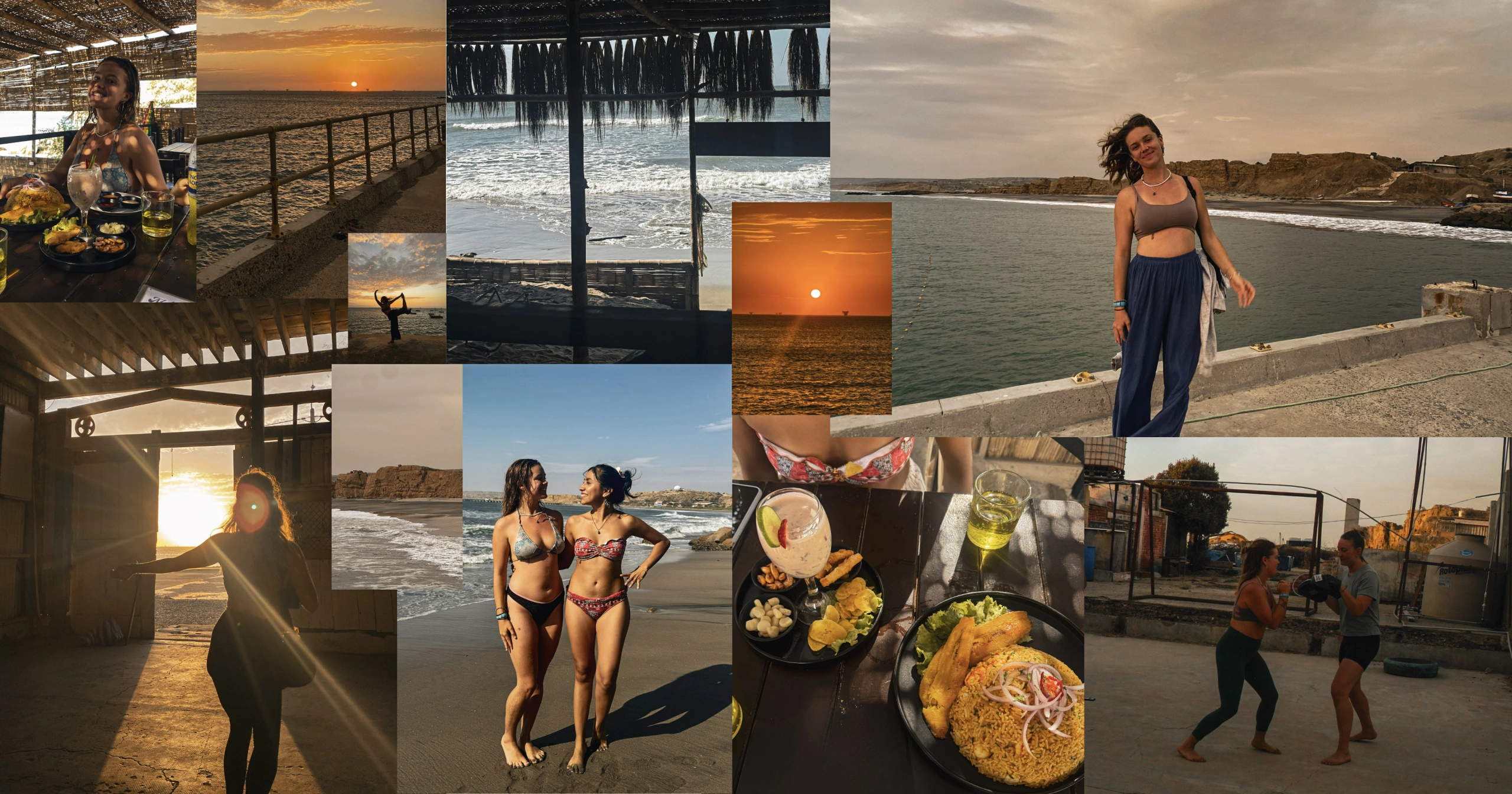
Known for its waves, ceviche, and golden sunsets, Lobitos has a laid-back charm that's hard not to love. Dusty roads, old oil infrastructure, surfboards strapped to motos, and long afternoons watching the sun disappear into the Pacific — life moves slowly here. If you're looking for a quiet surf town, a break from the crowds, or somewhere to spend a few days doing very little besides surfing and eating good food, Lobitos is the place.
How to Get There
~ Coming from Ecuador ~
Lobitos is located around two hours south of Máncora. If you're travelling down from Ecuador, you can take a bus from Guayaquil to Máncora, which takes roughly five hours.
For longer bus journeys in Peru, especially overnight routes, I highly recommend Cruz del Sur. They're comfortable, reliable, and worth the extra few dollars.
~ From Máncora ~
From Máncora, take a local EPPO bus south to Talara. The journey takes around 1.5–2 hours and buses run regularly throughout the day.
Once you arrive in Talara, walk a few minutes around the corner from the bus station to Empresa de Transportes "Israel de Dios", where you'll find shared taxis (collectivos) heading directly to Lobitos. The collectivo ride takes around 20–30 minutes and is how most locals travel between Talara and the coast.
This is the route I would recommend over taking multiple local buses. It's straightforward, affordable, and generally the quickest way to reach Lobitos from Máncora. If you're unsure where to go when you arrive in Talara, simply ask for the collectivos to Lobitos and someone will point you in the right direction.
~ Direct from Lima ~
If you're travelling from Lima, you'll need to take an overnight Cruz del Sur bus to Piura (around 18 hours) and then transfer to a bus heading to Talara. From Talara, follow the same collectivo route to Lobitos.
For getting around cities in Peru, InDrive is a great alternative to Uber and usually much cheaper. It's useful for getting between bus terminals and around town.
A Little History
One of the things that makes Lobitos feel so unique is its strange mix of surf town, ghost town, and old industrial settlement.
In the early 1900s, British companies arrived in the area after discovering oil reserves along the coast. What was once a small fishing village quickly transformed into a booming oil town, with English engineers, workers, and their families moving to Lobitos to work in the industry.
The British influence can still be felt today. At its peak, Lobitos had Victorian-style wooden houses, an English social club, tennis courts, a church, and even what is often described as one of the first cinemas in South America.
Walking through town now, you'll still see remnants of this history scattered between surf hostels, sandy roads, and rusting oil structures. Old wooden buildings sit half-abandoned overlooking the sea, giving Lobitos a slightly surreal atmosphere that feels very different from other beach towns in Peru.
The oil industry continued to shape the town throughout the twentieth century until the Peruvian government nationalised much of the industry in the late 1960s. Many foreign workers left, the town declined, and parts of the old settlement were abandoned.
Today, Lobitos has reinvented itself as a surf destination, but its oil-town history is still everywhere, the rusted oil rigs looking over the town from the horizon line.
When to Go
Lobitos is a year-round surf destination, but the best time to visit depends on what you're looking for.
The main surf season runs from around April to October, when consistent south swells light up the coast and the famous left-hand point breaks start firing. If you're chasing waves, this is generally the best time to visit.
November through March tends to bring smaller swells, warmer water, and quieter lineups. While the surf can be less consistent, it's a great time for beginners or anyone looking for a more relaxed trip.
One thing to keep in mind is the wind. Lobitos is known for strong afternoon winds, especially during the surf season. Early mornings are usually the cleanest time to surf, while afternoons are perfect for reading in a hammock, grabbing a long lunch, or watching the kitesurfers take advantage of the breeze.
Temperatures stay warm throughout the year, usually ranging between 20–30°C, though evenings can feel surprisingly cool when the wind picks up. A light jumper or windbreaker is worth packing, even if the days are sunny.
Where to Surf
Lobitos has a few different breaks depending on the swell and your level.
The Main Beach
The main wave in front of town is a long left-hand point break and is what put Lobitos on the surf map. On a good swell, rides can run for hundreds of metres. It works best with a decent south swell and can handle a fair bit of size. Even when it's not pumping, it's a beautiful place to paddle out, with the desert cliffs forming the backdrop.
The Pools
Further down the coast near the old seawater pools is another popular break known simply as Piscinas (The Pools). This spot is often a little more mellow than the main wave and can be a great option if conditions are crowded elsewhere. The wave breaks over reef, so surf boots aren't a bad idea if you're not used to rocky entries.
There are several other breaks scattered around the area too, making Lobitos a great base if you're chasing waves up and down the coast.
Other Things to Do
Watch the Sunset from the Pier
If there's one thing you shouldn't miss in Lobitos, it's sunset from the old pier. As the sun drops into the Pacific, the whole coastline lights up in shades of gold, orange, and pink. It's one of those places where everyone seems to stop what they're doing for a moment and watch.
Bring a drink, find a spot on the sand, or walk out towards the pier and enjoy the show.
Slow Down
One of the best things about Lobitos is that there isn't a huge list of attractions or activities. Life here revolves around the ocean, good food, and taking things slowly.
Spend an afternoon reading in a hammock, wandering the beach, watching surfers from the cliffs, or grabbing a coffee in town. Lobitos is the kind of place that rewards doing very little.
Food
I happened to visit Lobitos with two Peruvian friends, one of whom spends part of every summer there, and thanks to them I was introduced to some excellent local spots.
Malama
Some of the best food I ate in Peru was at Malama.
My friends were determined to make sure I tried as many northern Peruvian dishes as possible, so we ordered Leche de Tigre, Seco de Chavelo, and Arroz con Mariscos. Every dish was incredible.
You can access the restaurant from the beach at low tide or enter via the road above and walk down. From what I understand, Malama is generally open on weekends, although hours can vary depending on the season.
El Ancla
Another great option is El Ancla, which serves a solid Menu del Día for around 18 soles. If you're after breakfast or coffee, there are also a few cute cafés and an açai bowl spot along the main street.
For something sweet, keep an eye out for the small cake stand run by a local woman on the side of the road near the centre of town. Her homemade cakes became a daily stop for me. The chocolate and passionfruit cakes were both incredible, and she often has fresh empanadas and other baked treats available too. They're cheap, delicious, and exactly the kind of local gem that makes travelling in places like Lobitos so much fun.
Where to Stay
For budget backpackers, Los Muelles Surf Camp is about as affordable as it gets.
It's very basic — think no flushing toilets, rustic facilities, and an abandoned warehouse sort of aesthetic — but it's right on the water near the old pier (El Muelle), which is where the name comes from.
What it lacks in comfort, it makes up for in atmosphere. I met some great people there, and these small surf towns seem to attract a certain type of traveller that I always enjoy crossing paths with.
If you're after something a little more comfortable, there are plenty of hotels, guesthouses, and Airbnbs along the beach. You can book ahead through Airbnb or Booking.com, or simply wander around town and ask at a few places once you arrive.
Know Before You Go
Cash is king. While some places accept cards, it's worth carrying enough cash for accommodation, food, and transport.
Internet is available in most accommodations and cafés but can be unreliable at times.
Lobitos is a small, quiet town and things move at a slower pace than larger destinations in Peru.
The desert sun is strong, even when it doesn't feel particularly hot. Sunscreen, a hat, and plenty of water are essential.
Some surf breaks are over reef and rocky sections, so take care entering and exiting the water.
The wind often picks up in the afternoon, making mornings the best time for surfing.
Typical Costs
Collectivo from Talara to Lobitos: 5–10 soles
Menu del Día: 15–20 soles
Coffee: 5–10 soles
Budget accommodation: 25–50 soles
Mid-range accommodation: 100–250 soles
Surfboard rental: varies depending on season and board type
Why I Loved Lobitos
The landscape of Lobitos is a beautiful showcase of Peru’s dry sandy dunes meets wild pacific coastline. A place to slow down, enjoy the quiet and meet interesting characters off the usual beaten backpacking path. Sometimes the best places you’ll go are the ones you’ve never heard of before and are a bit hard to get to. Lobitos could be that sleepy hidden gem you didn’t know you were looking for.